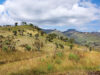
There may be good news for the Cross River gorilla following a new satellite and ground survey of their habitat. There appears to be more suitable habitat for them than first estimated. Just as important is the finding that there are wildlife corridors available to connect up these habitats.
This is good news for the world’s most endangered and rarest gorilla species. There are thought to be around 280 individuals left of the sub-species and they live in 11 main areas along the border of Cameroon and Nigeria.
The good news for Cross River gorillas is that they still have plenty of habitat in which to expand, provided that steps are taken to minimize threats to the population.
New habitat and corridors for Cross River gorillas.
The news that the survey has revealed wildlife corridors connecting up populations has been welcomed and there are calls to give more protection for these green corridors to make sure that gorillas can continue to meet for breeding with other gorillas outside the local population.
“We’re pleased with our results, which have helped us to identify both new locations where the gorillas live and apparently unoccupied areas of potential gorilla habitat,” said Dr. Bergl of the North Carolina Zoo, lead author of the study. “The study is a great example of how scientific research can be directly applied to great ape conservation.“
Wildlife Conservation Society (WCS) conservationist and co-author Andrew Dunn said: “The good news for Cross River gorillas is that they still have plenty of habitat in which to expand, provided that steps are taken to minimize threats to the population.“
The survey used high quality satellite images to classify land across the Cross River region. Local surveys were then undertaken to ensure the accuracy of the satellite based classification. After 400 checks points the satellite based survey proved to be over 90% accurate.
10 new areas of gorillas activity discovered.
After the checks the researchers then used the satellite classification maps to produce gorilla habitat suitability maps using various criteria. 12 of the most suitable areas were chosen to examine on the ground.
The field workers found that in 10 of the 12 areas there was evidence of gorillas using the sites. The evidence of gorillas were found in areas that had not previously recorded evidence of gorillas. Signs of gorillas activity included nests and dung.
The high level of success of finding gorilla activity demonstrated the value that satellite surveys can have in predicting suitable gorilla habitat especially in areas that are difficult to access and survey by foot.
Cross River gorilla habitat increases by 50%.
The new survey has boosted the habitat and range of the Cross River gorilla by at least 50% and also supports studies which show a high level of communication between the 11 known populations of the gorillas.
Protecting and re-establishing wildlife corridors is especially important for the gorilla as some of its population is under threat of becoming isolated due to human activities. An example is the small population in the Afi Mountain Wildlife Sanctuary in Nigeria. The sanctuary has become disconnected from the greater range due to agricultural land and other habitat degradation.
“For small populations such as this one, the maintenance of connective corridors is crucial for their long term survival,” said WCS researcher Inaoyom Imong. “The analysis is the first step in devising ways to rehabilitate degraded pathways.”
Study could help new 5 year conservation plan being devised.
The study is expected to be used in a workshop on the conservation of Cross River gorillas to be held later this month in Cameroon where a new 5 year plan is expected to be put together.
Dr. James Deutsch, Executive Director for WCS’s Africa Program, said: “Accurately assessing the state of available habitat is a vital foundation for future conservation efforts for the Cross River gorilla. A new action plan for the subspecies will build on the collaborative partnership already underway between Nigeria and Cameroon and ensure a future for this unique primate.“